Route the inquiry by purpose

Contact Ricoh Production Printing

Provide the destination market and exact printer family so the request can be routed to the appropriate commercial, application or service path. Product options, consumables, certifications and support coverage may differ by model and region.

01

System Selection

For a new DTG, UV, sublimation or inkjet project, send the substrate, target output window, shift pattern, finishing equipment and facility constraints. Include media width or platen requirement, artwork coverage, white or specialty ink demand, and the expected mix of short and repeat jobs.

A useful response distinguishes published print-engine values from complete-cell production. Loading, changeover, pretreatment, curing, transfer, cutting and scheduled maintenance can determine finished pieces per shift.

Response basis

Model-specific documentation, regional availability and trial requirements.
02

Application Trial

For print qualification, send the actual material, representative artwork, color or durability target and proposed inspection method. Identify coating, fiber blend, surface treatment, supplier and lot where available. State the equipment that will perform heat transfer, curing, laminating or another finishing step.

Set the pass/fail method before printing. A sample report is more useful when it retains configuration, ink set, profile, pass mode, environment, finish settings and the approved physical sample.

Response basis

Controlled sample plan, repeatable settings and acceptance record.

03

Existing Equipment

For support, include model, serial number, region, error or symptom, nozzle check and recent maintenance record. Add substrate lot, profile, job settings, environmental reading and photographs that show the issue without exposing confidential artwork.

Preserve the state before changing several settings. Separate printer, ink delivery, material preparation, media transport, cure and finishing symptoms. Do not submit passwords, payment information or unrelated personal data.

Response basis

Authorized regional service routing and an evidence-led next action.

What makes a useful print brief?

A concise record reduces follow-up and keeps the discussion tied to the production requirement. It also gives application and service teams a common starting point when a job crosses printing, curing and finishing responsibilities.

  • Exact substrate, supplier and lot information
  • Representative artwork, image coverage and run length
  • Available pretreatment, cure and finishing equipment
  • Acceptance method and known failure mode
  • Installation country or region

Do not assume a result on one material proves compatibility with another. Request the current model datasheet and ink documentation alongside the sample plan.

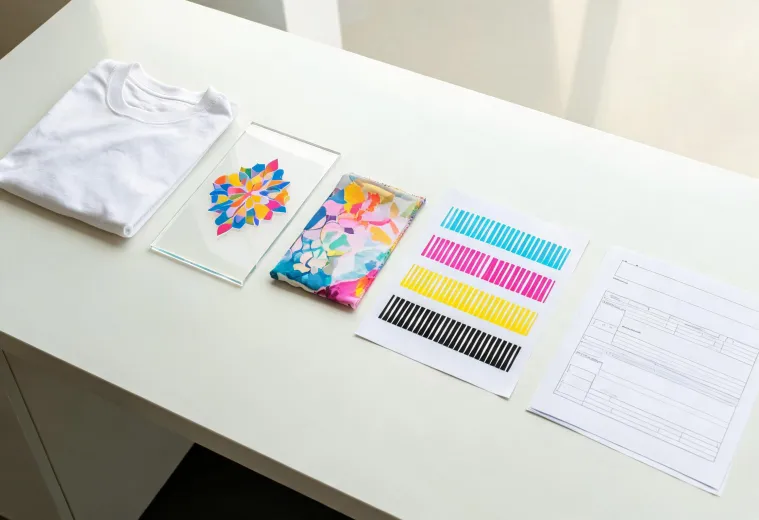
Print samples and test documentation prepared for review